

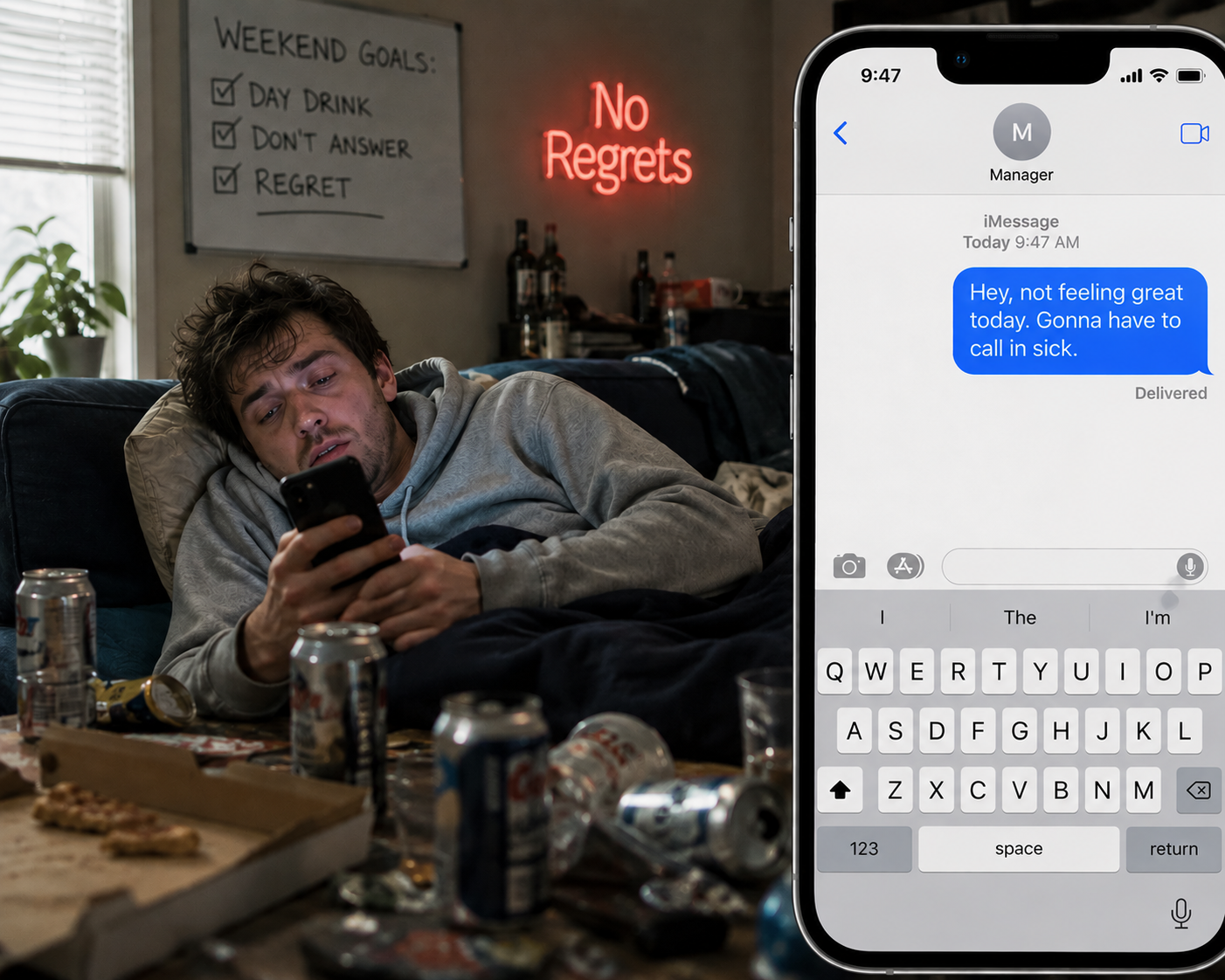
The long weekend’s over. Your inbox is full of “not feeling well today” messages, and funny enough, most of them landed at 6:58am. The day after a public holiday is the single most popular day of the year to chuck a sickie.
Everyone knows it’s happening. The harder question is what you, as the HR Manager, can actually do about it. That depends almost entirely on whether your paperwork is in order.
Here’s the full picture, including the messier scenario nobody likes: the person who does turn up, still running on the weekend.
The leave you can’t refuse
Start with the part you don’t get a vote on.
Under the Fair Work Act, every employee gets up to 10 days of paid personal/carer’s leave per year, accruing progressively and pro rata for part timers. If an employee is genuinely unfit for work because they’re sick or injured, they are entitled to take it.
Your suspicion that it’s a “Mondayitis” special is not a lawful reason to withhold the leave or dock the pay. You don’t get to play doctor, and you don’t get to punish someone for an absence you can’t disprove. Refuse legitimate leave on a hunch and you’ve created an underpayment and a general protections problem, which is a far worse Tuesday than the one you started with.
So the leave itself is not your lever. Your lever is everything around it.
The evidence you can require
Section 107 of the Fair Work Act does two useful things.
First, the employee has to give notice of the absence as soon as practicable, which can be after the leave starts but needs to be reasonable. A text at 6:58am clears that bar. Vanishing for the day and explaining yourself Thursday does not.
Second, and this is the one people forget, you can require the employee to provide evidence that would satisfy a reasonable person that the leave is legitimate. In practice that means a medical certificate or, where appropriate, a statutory declaration.
Two rules make this stick:
- It has to be in your policy. If your leave policy is silent or vague, your ability to demand evidence is weaker and easier to challenge.
- You have to apply it consistently. Demanding a cert from the bloke you suspect while waving through everyone else is how a tidy attendance issue becomes a discrimination or adverse action claim.
One more thing worth checking before the long weekend, not after: some modern awards and enterprise agreements have specific provisions about leave taken on the working day before or after a public holiday, including evidence requirements and, in some cases, the effect on public holiday pay. Don’t assume. Read the instrument that actually covers your people.
Managing the pattern
A single sickie is noise. You will never win, and shouldn’t try to win, the fight over one suspicious Tuesday.
The pattern is where HR earns its keep. A reliable run of Mondays, Fridays and post-holiday Tuesdays is not a leave problem, it’s a performance and conduct conversation. The move is to manage it with data rather than vibes: pull the absence record, show the pattern back to the employee calmly, and ask the question. Most people straighten up the moment they realise someone is actually counting.
Keep it factual. You’re addressing the pattern of unplanned absences and its impact on the team, not accusing anyone of lying. The record does the accusing for you.
When they show up impaired
Now the scenario that turns an attendance nuisance into a genuine risk: the employee who does come in, and is clearly still affected from the weekend.
Reframe this immediately in your own head. This is not primarily an attendance issue or a discipline issue. It’s a work health and safety issue.
Under the WHS Act, you have a primary duty to ensure, so far as is reasonably practicable, the health and safety of your workers. An impaired worker is a hazard to themselves and to everyone around them, and the risk is acute in any role involving machinery, vehicles, heights or the public. The duty to act sits with you the moment you reasonably believe someone is unfit to work safely. Letting them carry on because it’s awkward is the actual breach.
What to do in the moment
Handle the safety first. Discipline can wait an hour. Someone’s safety can’t.
- Remove them from the task. Stand them down from any work that could hurt them or others, quietly and without a scene.
- Don’t let them drive. Arrange a taxi or have someone collect them. Putting an impaired worker back behind the wheel is its own liability.
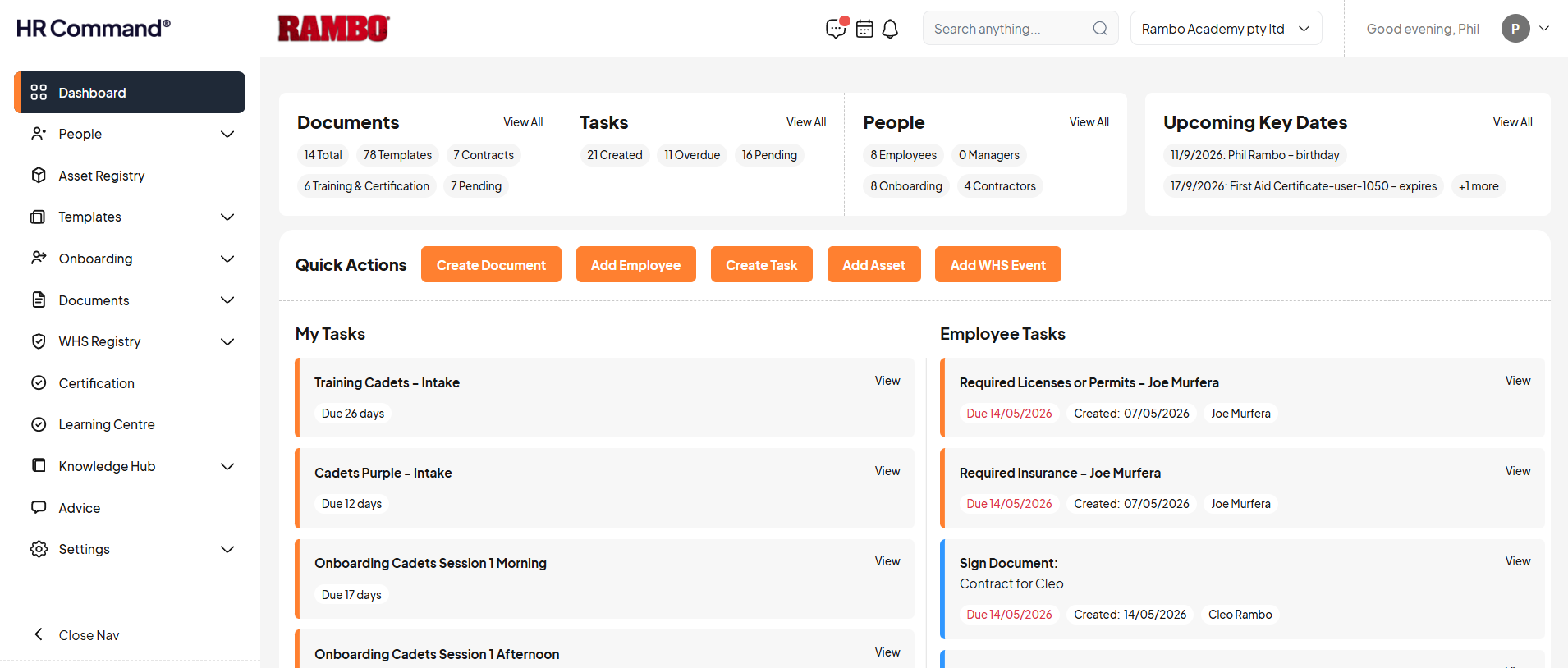
- Follow your drug and alcohol policy. This is where a written fitness for work or D&A policy does the heavy lifting: it gives the manager authority to act and a defined process to follow. If you don’t have one, that’s the real gap this article is pointing at. HR Command’s Workplace Drug and Alcohol Policy template covers it.
- Document what you observed, not what you concluded. Record the behaviour: unsteady, slurring, smelled of alcohol, glassy eyes. Don’t write “was drunk.” You’re not qualified to diagnose, and a clinical-sounding label you can’t back up will be used against you later.
- Test only if your policy or agreement supports it. You cannot demand a breath test or swab on a whim. The power to test, and the procedure for it, has to exist in a policy or instrument the employee is bound by.
Discipline, and the trap
Yes, being intoxicated at work can amount to serious misconduct. The Fair Work Regulations specifically list an employee being intoxicated at work as an example of conduct that may justify summary dismissal.
Note the word may. It is not automatic, and treating it as automatic is how employers lose.
Summary dismissal still requires a valid reason and a fair process: the chance to respond, consideration of the explanation, and a proportionate outcome. Context matters too, including the role, any safety risk, the employee’s history, and whether your own policy was clear and consistently enforced. Sack someone on the spot for “looking drunk,” skip the process, and you’ve swapped a hangover for an unfair dismissal claim that costs far more than one lost day of productivity.
So: manage the safety risk today, gather the facts, and run the conduct process properly afterwards. In that order.
The boring fix
None of this is complicated. The reason post-holiday Tuesdays cause chaos in some workplaces and barely register in others comes down to three unglamorous things:
- A clear personal leave policy that spells out notice and evidence requirements.
- A clear drug and alcohol or fitness for work policy that gives managers permission to act and a process to follow.
- Managers who apply both the same way, to everyone, every time.
Get those right and the sickie wave becomes a non-event. You’re not trying to stop people having a big long weekend. You’re making sure that when they do, the consequences land on them and not on you.
This article is general information, not legal advice. The specific obligations that apply to your workplace depend on the relevant award or agreement and your jurisdiction’s WHS laws.