


How businesses can prepare for Australia’s first explicit WHS duties for AI and digital work systems.
Digital tools now play a huge role in how work is allocated, tracked and monitored. Whether it’s rostering software, productivity dashboards, automated scheduling or AI-supported task allocation, these systems have become part of daily workplace operations.
The NSW Government has now taken a major step toward regulating these tools, announcing proposed amendments to the Work Health and Safety Act 2011 (NSW) to strengthen protections around digital work systems. These reforms mark the first time in Australia that “digital work systems” are directly recognised under WHS law and every employer using modern workforce technology needs to understand what’s coming.
What’s Being Proposed?
Under the proposed changes, a new duty will be added to the WHS Act requiring businesses to ensure, so far as reasonably practicable, that digital work systems do not create risks to workers’ health and safety.
A “digital work system” is defined broadly to include AI, algorithms, automation, online platforms and software that allocate, schedule or structure work. This could cover:
- Rostering and shift-allocation software
- AI-driven task assignment tools
- Monitoring or productivity-tracking apps
- Workflow automation systems
- Any platform that influences how work is allocated or evaluated
The proposed duty focuses on preventing risks such as excessive workloads, intrusive monitoring, unfair work allocation, algorithmic bias, and psychological harm.
Regulators and WHS entry permit holders would also be able to inspect these systems, including data, logs, and system records, where relevant to a WHS matter.
Why It Matters Now
While the reforms are still progressing, they represent a clear message from the NSW Government: technology used to manage workers must be safe, transparent and fair.
For many organisations, this means existing systems may need a fresh risk assessment. Even everyday tools, mobile scheduling apps, automated shift allocation, workflow software, could fall under the new duty.
This also signals that employers will be accountable for both the outcomes and effects of digital systems, not just human decision-making.
What Employers Should Do Next
To prepare for the proposed reforms, businesses can start taking practical steps now:
1. Map every digital system used to manage or influence work
Create a register of all tools that allocate tasks, track performance, schedule shifts or monitor activity.
2. Conduct or update WHS risk assessments
Consider risks around workload, stress, algorithmic fairness, intrusive monitoring and data transparency.
3. Review internal policies
Ensure your policies clearly address how digital systems are used, what data is collected and how decisions are made.
4. Consult with workers
Gather feedback from employees and WHS representatives to understand impacts and confirm safeguards.
5. Prepare documentation for potential inspection
Maintain clear records of risk assessments, decision-making, system logs and any mitigation steps taken.
6. Build governance around system selection and deployment
Ensure new digital tools undergo WHS screening before they are rolled out.
How HR Command Helps
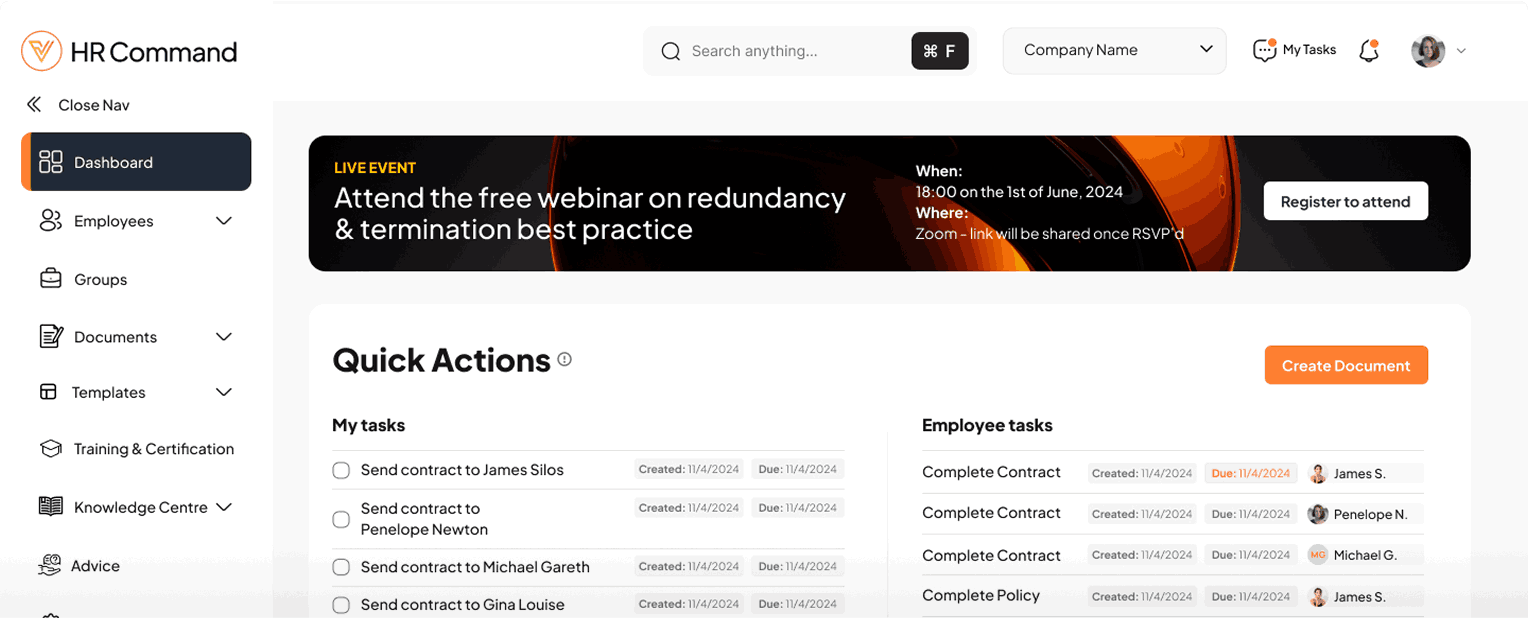
HR Command is built to support compliance with evolving Australian workplace law, including digital-system governance. You can use the platform to:
- Maintain a register of digital work systems
- Store risk assessments and track review cycles
- Distribute and version-control policies
- Log consultation activity with staff
- Manage training and awareness programs
- Record WHS decisions and audit trails
As the regulatory landscape modernises, businesses using HR Command can demonstrate strong governance and transparency over how digital tools intersect with work.
Final Thoughts
The proposed digital-safety reforms reflect a simple truth: as technology evolves, so must workplace protections. Employers who act early will not only minimise legal risk but also build healthier, safer and more trustworthy digital workplaces.
HR Command will continue to monitor updates and provide guidance as the reforms progress.
Sources
- NSW Government — “NSW Government strengthens guardrails around digital safety in workplaces”, 19 November 2025
- Work Health and Safety Amendment (Digital Systems) Bill 2025 (NSW) — Draft
- Norton Rose Fulbright — NSW WHS law update on digital work systems
- Allens — Regulatory developments on algorithmic management
- Unions NSW — Media release on digital safety reforms