

On-demand replay:
Good morning, everyone, and welcome to HR Command’s webinar, the new horizon. I’m Phil Parisis. I’m the general manager of HR Command, and thanks for being with us today. I’d like to acknowledge the traditional custodians of the land we are all joining from today. For me, that’s the Gadigal people of the Eora nation. I pay my respects to elders past and present and extend that respect to any First Nations people with us today. Thanks for our partners and supporters, for today’s events. I really appreciate everyone’s time and all the help that’s gone into this webinar to make it happen, especially for everyone who’s joining us, from a partner or association, etcetera. I really appreciate you making the time today to be with us. This is a jam packed session, so I’m very conscious of time. So, hopefully, you had some lunch before this particular session has, has started. But as I mentioned, we have a lot on we have a lot to get through today. So it is gonna be a fantastic webinar. We have some fantastic speakers who are gonna join us today. A couple of things with the session. There is some housekeeping. There’s comments or chat live. So please, if you wanna ask a question, ask in that stream. And and with that with that with the q and a in in any stage of the show, please do not hesitate to to ask the questions, and we’ll put them live if you are if you are wanting to go live. Don’t forget your name will be presented on the webinar and on the replays and anywhere you work, etcetera, if you decide to add that information, basically inside. So there’s a lot to get through today. As I mentioned, we will, if we have time, have a, panel session at the end of it. So, please, stay along for the panel and ask keep asking your questions, etcetera. So we are stacked as superb speaker list, and depending on the time, we will do a panel at the end. But just as we’re getting started, just to test out some of the features that we’re actually running with and before we dive in, if you like to introduce yourself in the comments, please do. Anything like, you know, your name, your location, or, you know, where you work, we’d love to see that first. So wait for some interaction and we’ll kick off. Okay. Great. Welcome to everyone. Welcome. Welcome. From home, welcome, Catherine. Thank you all. And by the way, for anyone who’s actually putting questions before the webinar started in the form, we will have some of those questions responded to already in our in between our content too. So please, if you did ask a question, we have tried to distribute that to all the speakers today. And if it matches, we will be able to answer your questions. Of course, during the session, you’ll have access to the people post event too. We’ll supply LinkedIn details, of course, everyone can be contacted on LinkedIn. And if you have questions directly, you can go ahead and ask them. K. We’ve got a couple more people saying hello. Hello, Maria. Hello, everyone on LinkedIn too. Welcome. Welcome. Perfect. Alright. So we’ll kick off the flow today. So as we transfer diff to different speakers, there will be about thirty seconds to a minute delay. So just FYI, we’ll put some nice cruising music for you to listen to as we move to the next speaker. But with me today, I wanted to kick off, of course, with Caroline Beasley. She’s a senior associate doing employment law at Cal Clark. And we’ll run through the big IR and compliance issues for twenty twenty five, what was before, and what’s coming up in two thousand and twenty twenty six. So without further ado, I will go offline, and Caroline is gonna join us in a second. So please stand by. Thank you very much. Good morning, everyone. My name is Caroline Daisy, and I’m a gender associate at CalPrott. And here to talk today about the big changes that we’ve seen this year in twenty twenty five and what’s coming up in twenty twenty six. We just move to the next couple of slides. So here’s a bit of an overview of what we’re going to cover. To be honest, it was hard to pick three topics for each area, but we’ll do our best to cover the big ones. The first area that I wanted to talk about today is in relation to wage theft and underpayment. We’ve seen a lot of important changes in this area this year, and probably the major one was on the first of January when a new criminal offence for wage theft was introduced. So under this regime, employers commit a criminal offence if they intentionally fail to pay or pay late any part of an employee’s entitlements under the Fair Work Act. If an employer does this, they’re exposed to pretty significant potential penalties, which we’ve got there on the slide. And the new framework was quite heavily publicised at the time it was introduced, the Fair Work Ombudsman had set up some teams for enforcement of this new regime. But looking back over the year to come, the year that’s been, we haven’t actually seen any publicised criminal cases yet. So that that might mean that this scheme is working as a deterrent. But what we do know is that underpayment is still happening, and the Fair Work Ombudsman has recovered three hundred and fifty eight million dollars this year. And that includes record court penalties, as well in the year. And another part that I thought was interesting about this figure that the Fair Work Ombudsman has recovered is that about sixty percent of that came from large corporates. In the context of underpayment, I did just want to touch on another big development that we’ve seen this year, and that is a federal court case which deals with an area that’s pretty complex and can cause some confusion for employers, and that is the use of above award salaries to offset entitlements that employees might be entitled to under an award. Many of you might have heard about the recent Coles and Woolworths decision, and and we don’t have time to unpack it in detail today. But what’s important about it, something that’s taken some employers by surprise, is that the federal court clarified that when these arrangements are used, employers can’t be relying on an overpayment in one pay period to offset an underpayment that occurs in another pay period. So, that is, they need to be looking at what’s happening in one pay period alone and considering each one separately. While some employers were already doing this, others were not. And I think what’s important about this decision is that employers are on notice about what approach needs to be followed. And I think this is going to be an area that will be watched in twenty twenty six. We’ll just move to the next one, which is the right to disconnect. It has been another area of focus this year, but probably not for the reasons we thought it would be when we were at this point last year thinking about what was to come. So of course, when we’re talking about the right to disconnect, we’re looking at the protection in section three thirty three ms of the Fair Work Act that permits an employee to refuse to monitor, read or respond to contact or attempted contact from their employer outside of their working hours unless that refusal is unreasonable. So that’s in the Fair Work Act, and there’s also right to disconnect terms in modern awards. So this year we saw the right to disconnect commence operation for small businesses in August. It had already been in effect for employers who were not small businesses since last August, so it exists for all employers now. But what has been interesting is that we’re sort of twelve months in or for small businesses, four months. And at the time we were sort of looking at the right to disconnect, there was a lot of concern that it was going to be problematic for employers and lead to reduced productivity. But at this point, the laws are yet to have any significant testing. So, I mean, perhaps that means that employers are are doing the right thing and and they’ve sort of looked at their compliance obligations, implemented policies, and the workforce understands what the policies involve, and disputes are not escalating to the Fair Work Commission. But the Fair Work Commission themselves has even noted that there’s no significant disputes, they’re in a position now where they were legally required to think about introducing guidelines about the operation of the right to disconnect. And they’ve commenced a process where they’ve asked interested parties whether or not it’s even worthwhile to do that just because of the fact that there’s been no significant disputes at this point. So don’t think the Fair Work Commission has decided what to do about the guidelines yet, but it’s interesting nonetheless. And I think if there’s time at the end, it’d be interesting to hear from some of you about how you think the right to disconnect is working in your business and if you’ve seen any kind of testing of it, without it sort of escalating to that more public level in the Fair Work Commission. Go to the next one. Thanks, Phil. The third area that we’ve seen some change in this year is a High Court decision in relation to redeployment obligations. So this was a decision that came out in August about redeployment in the context of redundancy. So as we know, for the purposes of unfair dismissal, a dismissal will not be unfair if it’s a genuine redundancy. And as part of considering whether or not a redundancy is genuine, there’s a requirement to look at whether or not redeployment would have been reasonable. It’s clear before this decision, it was clear that this inquiry involved looking at any open positions within the employer and any related entities of the employer. Why this decision was so publicised at the time was that this inquiry can also extend to, require the employer to offer jobs that are currently being performed by contractors in the business if those contractors are are about to sort of become available. So it’s there was a reasonableness element in this inquiry. So while while this decision might not be relevant to all businesses in conducting restructuring, and it wouldn’t require removing a contractor from a role that was not about to become available. It would mean that if you have got, positions in the business that are being performed by contractors and you’re conducting a restructure, it’s just another thing to consider as you’re preparing and planning the process, just to tick off whether or not you’ve you’ve kind of managed that that risk. Alright. So let’s look ahead what to look out for in twenty twenty six. I feel like we say this every year now, but twenty twenty six looks like it’s going to be another big year in industrial relations. So I’ve picked three areas that I think will be important to watch for employers as we move forward into twenty twenty six. The first one is the banning of noncompete clauses in employment contracts for employees who earn under the high income threshold. We’re likely to see a bit more detail about this. It was an election commitment from the Albanese government, and it’s been very heavily publicised. I’m sure you’re all aware of it. But we’re still in a position where we haven’t got the detail of of exactly how this is gonna be implemented. We do know that the plan for this is to commence from twenty twenty seven, I think July twenty twenty seven. So there’s a few things that you can do in twenty twenty six to prepare for this, and and that is things like reviewing existing contracts, assessing how how widely used these types of terms are, and also what the income level of the people with those clauses is. And when you do this, just bear in mind that the high income threshold is indexed every year on the first of July and it increases. So by the time we get to the first July twenty twenty seven, it’s likely to be a little bit closer to about two hundred thousand. The current figure is there on the slide, but just bear in mind that that is probably going to change. The second, area to watch for in twenty twenty six is the introduction of payday super reforms. So this passed parliament on Tuesday, I think, very recently, and what it will do is to require employers to pay their employees superannuation contributions on the same day as they pay salary and wages. So the superannuation contribution has to then be received by the employee’s fund within seven days. So this is quite a big change from the current approach. So it’s going to be important to review your current payroll procedures just to check what might need to change so that you can comply with this new framework. I think the commencement date is there on the slide and it’s the first of July next year. The third topic that I think will be one to watch is working from home and flexible work. It continues to remain a hot topic, and we’ve seen a lot of disputes this year from the Fair Work Commission in relation to flexible working arrangement requests. I think recently there was a decision involving Westpac that received a lot of attention in the media. I think in twenty twenty six, it’s gonna remain important to be across these decisions coming out from the commission. But I think what really lies at the heart of this is that the importance of following the Fair Work Act when you’re responding to requests for flexible working arrangements. Like, for me, that’s really the key takeaway for employers from a lot of these decisions. And also in relation to working from home, the Fair Work Commission is continuing its award case on developing a model term about working from home in the Clarks Award. And I think the plan for that is for that then to be introduced across other modern awards as well. So there’s nothing to worry about at the moment, but it’ll be important to watch if you’ve got award covered employees in your business. I also just wanted to mention a Greens policy for a legal right to work from home two days per week. It’s not quite clear what will happen with this, but an interesting thing to note in the space nonetheless. Alright. I also wanted to talk a bit about artificial intelligence and its risks and opportunities. We’re seeing it used more and more in the workplace these days, and it’s definitely very topical. So I just wanted to spend a few minutes talking about that. If we go to the next slide. So these are a bit of an overview of the topics we’ll cover. And if we go forward again, we’ll start off with what is AI. I think we all know and are familiar with the term artificial intelligence, but it’s actually really difficult to find an agreed definition for for what it is. So it’s sort of helpful to talk about what it includes. It includes a range of systems that can perform tasks that usually require human intelligence, and they do things like learning, reasoning, problem solving, and understanding language. It encompasses machine learning, which is where systems learn from large volumes of data to identify patterns and make predictions or decisions. This is sometimes called predictive AI. And it also includes generative AI, which I think you’ve all heard about, and that’s powered by large language learning models or LLMs that can understand, summarise, recognise, translate, predict, and generate text and other human like content. So that is what we’re talking about when we’re talking about AI. So how is it currently being used in the workplace? Many workplaces are now using AI in some form. However, on the whole, when you look at Australia as a whole, uptake is is variable in terms of how how much it’s introduced. A lot of workplaces are doing pilot programs and and that kind of thing rather than adopting it on the whole across the board. Some of the common ways that it’s being that AI is being used are for tasks like more knowledge and administrative tasks in things like summarizing information, creating a first draft, taking minutes of meetings, preliminary data analysis and digital communication. In the context of software development, it’s used to generate code and perform debugging work. In customer service and internal processes within businesses, a lot of AI can be used for generating, like in in a chatbot context to answer questions from from customers or internal, employees with questions kind of thing, and also for streamlining administrative workflows. I think it’s fair to say that a lot of workplaces are looking at ways they can utilise AI more in the future. Even the Fair Work Commission is looking at this. Recently, President Hatcher, indicated that he thinks there’s a role for AI to play at the commission and said that people should expect to see the Fair Work Commission website have chatbots on there to answer some common questions from the community, and that would allow staff to be deployed to answer the more complex questions that require a human. He did clarify that AI would not be used in decisions, though. I’ll just move on and talk a bit about the use of AI in the HR context. There are a lot of potential applications in this context, and I’m sure some of you might already be aware of a recent report published by the Australian Human Resources Institute, or ARI, with the Queensland University of Technology. This report was based on a survey of HR practitioners, and it found that in this context, AI was most commonly used in providing those self-service functions for employees and also advice on policies and that kind of thing. It was used in reporting and training to sort of prompt employees to complete mandatory training and that kind of thing, as well as onboarding, writing job descriptions and job ads, writing policies, summarizing survey results, and drafting communications. The survey found that in the human resources context, AI allowed HR practitioners to focus on the more knowledge intensive parts of their role, but it wasn’t really being used for those sort of work tasks, like forecasting and and those type of activities. It was more focused on the the ones that I mentioned before. There there are also a number of AI tools that are available for use in recruitment and doing things like screening, shortlisting, testing, or even interviewing candidates. However, the AHRI survey indicated that there was a bit of a reluctance to use these tools, like, in general, because of the potential that that they could discriminate or behave in a biased way. Alright. So this is a convenient point to segue into talking a bit about some of the risks and opportunities with AI in the workplace more broadly. I think it’s clear that there’s a case for the use of AI. It can streamline workloads to make roles more efficient, allowing humans to focus on the tasks that actually need their input. And it can also make the workforce more productive. However, at the same time, it is not risk free. And I’ve got in in the right hand column there on the slide a list of some of the main risks that we see in this space. So the first one is in relation to privacy. So that’s things like where is the data stored? Where is it located? If you’re using client data to upload to AI or personal information, have they consented to this? We’ve seen the Office of the Australian Information Commissioner, which is the the privacy regulator, issue guidance on on privacy and the use of commercially available AI products in Australia, and it outlines how using AI interacts with the Australian privacy principles and some some things to kind of keep in mind if if you are using that. So that’s a really helpful resource. Another risk is accuracy. So how can you know that the information that the AI has produced is correct? Is it telling you what it thinks you wanna hear? We’ve seen some high profile cases in the media of businesses using AI for client work and it perhaps not being as accurate as it should be, one recently involving Deloitte. And and in that case, it led to having to issue a partial refund for some of the work that they’d done. So not without risk there. And then, of course, there’s legal risks like discrimination and bias. And that arises a lot in the HR context, as I was speaking about earlier. So I just wanted to to drill down into two key risks in the next couple of slides. So the first one is, will AI take our jobs? This is often used in the context of AI. It’s it’s a very common refrain. I’m sure we’ve all seen it, maybe felt it. And it leads to a reluctance to adopt AI. I think in terms of how much this is actually happening at the moment, I think it’s a little bit mixed. We know, like, it’s true that some of the shortcomings of AI make it clear that there is a need for human involvement still. And and we’ve seen, certainly in the legal context, we’ve seen cases where AI is being used for, legal documents, and the Fair Work Commission has reported more and more self represented applicants using AI to help them write applications. And these can be inaccurate. So I think recently there was an article that I saw about an employee who’d lodged an unfair dismissal application nine hundred days outside of the twenty one day time frame. And I’m sure many of you will know that that’s a very strict timeline, but AI hadn’t picked this up when drafting the application. It’s worth noting here that OpenAI has recently I think it was this week changed its terms to say that it won’t give legal advice. But I think there’s a little bit of uncertainty about how effective that’s actually going to be in stopping people. It’s worth noting on the jobs point that not all jobs face the same risk of automation. Some are more exposed than others. And the risks that have come to light with AI so far, I think, indicate that maybe it’s more likely to change the way we work rather than lead to reduction in jobs. Although getting to that point, it’s not quite clear how many job losses will result on the journey to getting to that point. There was, I’ll just mention quickly, a Jobs and Skills Australia report on Australia’s transition to using generative AI that was released in August. And that report found that even in jobs that were considered to be more highly exposed to automation, it didn’t detect an impact on hiring yet in those jobs in terms of entry level roles. So so it hasn’t according to this report, it hadn’t quite impacted the hiring stage. But certainly, anecdotally, we hear in the media of job losses happening due to AI. I think perhaps I’ll be here in twelve months’ time with a very different set of statistics to talk to you about. It’s certainly going to be an area to watch in the year to come. Something that we may see more of in trying to protect against potential impact of AI on jobs is AI turns in enterprise agreements. We’ve seen last year the Fair Work Commission approving, the United Super Enterprise Agreement, which I’ve mentioned there on the slide. And at that time, the Finance Sector Union, which was a party to this agreement, described it as the gold standard for AI in enterprise agreements. And it contains an agreed definition of AI. It requires the employer to consult. It has an additional five day period for consultation with employees if a change is happening due to AI, as well as if AI is involved in making decisions that affect employees. They need to be provided with information about the parameters that, were used by the AI. So it’s gonna be and there are more enterprise agreements coming through with AI terms, and I think it’s gonna be interesting to see how much of a theme this becomes in bargaining. And, you know, perhaps this time next year we’ll be looking back, and this will be in every enterprise agreement. It’s hard to know, but definitely an interesting area to watch. Another risk to talk about is shadow AI use. So what I mean by this is even where organisations are not actually adopting AI officially in their own work, The ease with which employees can access these tools in a personal capacity means that these employers are potentially exposed to all the ethical and legal risks in relation to AI use that I’ve spoken about earlier. So things like plagiarism, inaccuracy, discrimination. But the difficulty is they don’t have visibility over it, and it’s occurring without oversight from the employer or the IT team. So while this slide might be reason enough or this presentation to think about adopting AI if you’re not already, it does demonstrate that at the very least it’s best practice for employers to have in place a policy outlining acceptable use of AI, even if you’re not implementing AI broadly across the workforce, to help protect against things like shadow use and make it very clear what the employer’s expectations are around AI use and also what the consequences will be if an employee is found to be breaching the policy. Alright. So to sort of tie this all together, what is gonna be the way forward with AI in the workplace? It’s clear, I think, that there’s a lot of positives to using AI to supplement but not replace human work. It can help humans produce more or better outputs, but there are risks associated with with it, and risks with ignoring AI. For example, you could be exposing yourself to shadow use and then you all the same risks anyway. I think we’re gonna see more AI adoption in twenty twenty six, but it will be important to ensure that there’s guardrails and clear policies and expectations around it in a workplace context. Think key things for policies and putting these guardrails around it, It should be sort of focused on preventing shadow use of AI, outlining if you are using AI in the workplace, it’ll be important to outline expectations around verifying outputs, reducing discrimination in outcomes, if there’s particular tasks that it’s acceptable to be used for or not, outlining that. If there’s a third party, if you have clients or users of your business and their information might end up in AI, it’s also important to make it clear to them what’s happening in that space as well. And sometimes, some businesses also if they have users interacting with them and those users may be using AI, we’re seeing businesses regulate that as well. So easy example for me to talk about as a lawyer is courts. A lot of courts are requiring submissions that are lodged to come with a certificate or some kind of declaration that AI has not been used in preparing documents. And again, that might be something worth considering. In addressing some of the impacts of AI on jobs, I think we might be seeing enterprise agreements grappling with this a bit more, as I said before. But there may also be a role for government to play in this space in terms of regulating it. And I just wanted to quickly talk about in New South Wales, recently, I think it was in maybe it was in August, the government introduced a bill that would amend the Work Health and Safety Act to introduce a new duty on PCBUs in relation to the use of digital work systems, which is defined to include AI and automation, to ensure that the use of those systems does not pose a risk to health and safety. This bill, while it’s the first of its kind, it’s still in bill form and it’s still before the New South Wales Parliament. So nothing to report on this yet, but it’s a case of watch this space into twenty twenty six, I think. Thank you, everyone. Feel free to ask any questions we have time or we can return to them at the end. Hi, everyone. I hope you can all hear me. Thank you for having me. So I’m here to give you an economic update. As you know, economics is a very broad field of work. But given today’s conversation, I think I’ll start with an update on the current labor market. So what I intend to do first, as I mentioned before, is to give you an update on the current labor market. Oh, perfect. This is wonderful. I think this is the question that is probably the most topical at this point in time. Different people tend to have different interpretation of what their current labor market status is like. On one hand, we’ve got people who are very concerned about the recent increase in unemployment, but on the other hand, there are also people or including the LBA saying that this is still considered a little bit tight. So nothing really to worry about at this point. And so I just thought I’d give you an update in terms of how we look at this picture. So I’ll start off with this graph. The darker line represents the unemployment rate. As I said before, in the latest month, September, there was an increase of unemployment from three four point three percent to four point five percent. So, you know, for those who track economic data, that increase was considered, you know, pretty sizable. I know it’s only point two of a percentage point, but it was considered, you know, a pretty big increase over the course of one month. But on the other hand, what you can see is that if you look at, the historical trends, the current level is still relatively low compared to, how things used to be. And at the same time, increasingly, we’re hearing this term full employment. Some people always think that full employment means that unemployment needs to get down to zero. But in practice, that is not realistic because at any point in time, you always have people who are changing jobs, and you also, you know, have people who need to be retrained in order to move into new industries. So it is unrealistic for us to say that unemployment needs to go down to zero. Besides what we mean by full employment is that at this point, a full employment, that is when the economy is operating at its full potential, without causing inflationary pressures. So what we experienced during the pandemic, during the height of the pandemic, was that the labor market was extremely tight. So those of you, who run a business or who are on the hiring front, as a manager would know it was extremely difficult, to to hire people, to find to find applicants, let let alone, finding the perfect candidate, for the roles, that were vacant. So that was a time that was considered as a bit of a red flag, in terms of inflation because, the economy, the the labor market was being very tight, and there was definitely a lot of inflationary pressures across the economy. So now despite that increase, some people are definitely seeing that as more of us returning to the level of full employment, which is where we’re operating at full potential without causing that inflationary pressure. So that’s kinda like the sweet spot. So that’s why some people are not overly concerned about the recent increase in in unemployment rate. Now the other indicator that I like to track is the yellow line, the underemployment rate. What this one means is that, some people are employed, but they are not working the desired number of hours, because the definition of being employed is actually pretty pretty loose. If you work one hour each week, you are considered employed. But, of course, if you think about it from a more practical sense, working one hour a week is definitely not sufficient for people, you know, to to maintain, you know, to to to maintain their basic expenses. So, therefore, to me, I like to look at the yellow line as well because that may actually represent a lot of people who are working part time but would actually like to, you know, do full time work to earn a, a larger income. So I look at both lines together, when I assess how tight the labor market really is. So what you can see is that unemployment has been pretty steady and is you know, just like unemployment is is still very low by historical standards. And together, I I think, so I’m more on the camp of thinking that this is, like, nothing overly alarming at this stage, but, of course, we’ll be closely monitoring the trends over time. And bear in mind that unemployment numbers can be a bit bumpy from one month to another as well. So, you know, in the past, we’ve definitely seen an increase of, you know, point two over percentage point of unemployment rate, only for it to again retreat the following month. So, at this point, I’m still closely watching without being overly alarmed, as I said. And on the right hand side, you can see, a state by state breakdown with regards to the latest unemployment rate. Apart from a couple of states, like, most states have, pretty low unemployment rates still as you can see. So on this so on this note, definitely, there’s nothing that is, like, overly concerning. And on the other hand, lots of people are still arguing that there is a worker shortage, there’s a skill shortage. So I would like to refer to the findings from Jobs and Skills Australia’s research. They produce an occupation shortage list. So what you can see is the trend in recent years. As we mentioned before, during the pandemic, the unemployment rate was extremely low. It was hard for employers and managers to find workers, and you can see that it peaked in twenty twenty three when the shortage leased, was actually over, thirty five percent of occupations, and, it’s come down a little bit. And despite the increase in the unemployment rate, the latest reading, as you can see, indicates that twenty nine percent of the one thousand, of the roughly one thousand occupations that they looked at were still experiencing shortage. And bear in mind, there is definitely variation, across different states, and also it depends on whether we’re looking at metropolitan areas or or regional areas. So there there are some differences like that. But then there are some common trends that we can see, which I’ve summarized in in the box on the right hand side. There are some occupations that definitely clearly in shortage, and I think there probably, not a lot of surprises here if you think about, you know, if you just sort of look around your your yourselves. Health is definitely an area. Things like, jobs like registered nurses, they are definitely in shortage, And that’s, you know, because we all know, number one, we’ve got an aging population. And second is that we are increasingly health conscious. So people are doing preventative screening, etcetera. So a lot of the time, you know, we we’re definitely seeing the health sector being quite resilient even during, you know, during headwinds experienced by the broader economy, which also translates into, you know, consistent demand for workers. And, on that note, health is definitely on the list of, of occupation shortage. And then there are sectors like construction, which we know is also experiencing, a shortage. I’ll touch on I’ll I’ll go through this topic a bit later in terms of, the housing situation. But, definitely, a shortage of worker is something that is holding holding us back when it comes to delivering, you know, delivering projects. So these are some of the sectors that are, that are experiencing shortage across the board, regardless of whether you’re looking at, you know, which states or whether it’s, you know, metropolitan or or regional areas. So, so here’s just a quick, snapshot about our, current labor market status. But this graph, nevertheless, reminds us that, you know, we are experiencing, we are we are currently in the middle of a multi speed economy. Because on one hand, you do have some sectors that are probably letting go of staff, but on the other hand, you still have some sectors that are experiencing worker shortage. You know, as as as you saw on the previous slide, twenty nine percent of a shortage, so that is not a small number. Now before I get into the detail about, like, why we’re experiencing a multi speed economy or in what ways, just wanna give you this summary picture of how the Australian economy is currently traveling. So this is so this graph shows our GDP growth, our economic growth in in recent years. What you can see is that the the green bars represent the quarterly growth rate, and then the yellow line represents, the year on year growth rate. I think you can definitely see the trend looking at that yellow line. Things have bottomed out. We are gradually recovering. And, if you look at that quarterly, bar from the latest period, it is sort of back to the long term average as well. So that is encouraging. But I know some people are still saying no, but things still seem pretty tough, you know, in my field of work. That may be true as well. Because if you look at, our growth rates for the last financial year overall, the economy expanded by one point three percent, and that is basically half the pace of the last, twenty years average. Okay? So if you think about how, how the economy performed over the last twenty years and you looked back at, the previous year, yes, things did seem slower. But, nevertheless, the economy was growing, so that’s positive, because, you know, when people worry about recession, that is when the bars will be in the negative zone. So we didn’t have that. You know, in fact, despite the interest rate increases, that we had, in in in in the last couple of years, we’ve managed to, to achieve a soft landing. Okay? So we actually managed to bring down, inflation without, causing the economy to dip into negative territory. So I think that is something, that we should acknowledge. Of course, there’s still some way to go for us to actually, revive economic growth, especially if you compare that to our twenty year or thirty year average. But, nevertheless, as I pointed out earlier, we are on an uptrend, so that is that is good. But, of course, there are risks that I will cover shortly as well. So now going back to, what I said before about the multi speed economy, this is a graph that I like to show in my presentations because I don’t like to talk about things in a one size fits all approach because that’s not how things work. Different industries sort of performing differently. And even within each you have some firms that are outperforming others as well. But let’s look at the industry breakdown of our of our economic growth, here. I like color coding things. So looking at each industry, I’ve sort of color coded their performance. Whilst they’ve been ranked by the latest quarter’s performance, you know, the latest quarter being June twenty twenty five, that’s the latest period where we’ve got data. So we’ve ranked it based on their their quarterly performance in the latest period, But I’ve also compared that latest quarter being June twenty five against June twenty four to see how things compared to exactly the same period a year ago. And then on the right hand side, I’ve also looked at, the entire financial year compared to the previous financial year. So the sectors that are color coded green were the ones that I would consider to have a solid performance with positive results regardless of which measure you look at. Okay? So there there are a few that that you know, for example, health that I pointed out before. I know I used the word resilient, but, you know, they’re pretty solid because whether your economy is going through a downturn or, you know, an upturn, demand for health can be quite consistent because as I said, it doesn’t change the fact that we are having it you know, we’re we’re still experiencing an aging population or, you know, people still care about health. So so this has been pretty solid. And on the other hand, you’ve got some sectors that I’ve color coded yellow. So they are the ones that I consider to be recovering with some positive quarterly results but negative annual results. So what it means is that in the latest quarter, they all had a positive performance. But if you look back, you know, towards the the the same performance in the same period a year ago, it was it was a negative results. So they’re the ones that I consider to be still, you know, to be watched before I would, you know, move them to the green segment. But on the but having said that, though, there are two that I have found pretty encouraging. One being accommodation and food services, so that’s our hospitality industry, which really suffered a lot during the pandemic to start with. And then with the interest rate hikes, I know a lot of hospitality businesses really experienced, you know, the the reduction in consumer spending as people talked about mortgage stress, etcetera. So it’s encouraging to see that it had, a pretty, pretty solid rebound in the recent period. And the other thing that I like to point out is retail trade as well, following a similar trajectory, compared to hospitality. So these are the two recovering sectors that I would like to highlight. Now there are few sectors that are color coded red. So they are the ones who had, well, essentially negative results. I don’t I don’t think I need to explain too much there. They contracted in the most recent quarter compared to a year ago. They were also not doing really that much better. So professional services, unfortunately, is one of those is experiencing a lot of challenges at the moment with the reduction of jobs. And then manufacturing and construction, they’re also the sectors that are having a bit of a difficult time at the moment as well. So looking at this picture, I hope it gives you a, you know, somewhat of an impression of what I mean when I talk about multi speed economy. So that’s why some people may talk about how things are being tough, but then some people may be thinking that, no. Things are actually going fine in my industry, and this picture tells you why because there is definitely, different levels of performance, across our economy. Now I just wanna talk about some of the things that will definitely, reemerge or, like, to persist in twenty twenty six, as a challenge, for our economy. I wanna talk about the housing shortage. I still remember years ago when people talk about housing, it was more like a social problem. You know, people see that, like, from a social perspective. But in recent years, housing has become a business problem as well. Having spoken to businesses a lot, I’ve learned that housing can be can be a barrier when it comes to finding staff. Because, you know, when people decide whether to take up a job, they also consider you know, they also consider the availability of housing in that area, you know, whether it is suitable for their families and, you know, all sorts of housing related considerations. So housing has become a bit of a challenge for businesses in recent times as well. So hiring is one thing. The other one also is about housing stress. So no doubt, like, when there’s housing stress, a lot of, you know, employees will raise it with their employers for additional support, etcetera. So is this getting better in the new year? Probably not. It will take some time for us to see any concrete improvement. So on this topic, I want to refer to the government’s National Housing Accord. The government set a target of building one point two million new homes in five years starting starting in the twenty four to twenty five financial year. So right now, we’ve got the result for the first g. So in this graph, what I’ve got is, you know, if you divide one point two million over five years, so that’s essentially two hundred and forty thousand new homes per year. So this is basically averaging out to see how we should be tracking if we want to reach that target at the end of the five years. What you can see is that the orange bars represent what has actually been completed. And so we fell short of target in the first quarter, and then we fell short again a little bit in the second quarter. But then this this this shortfall accumulates over time. Okay? So at the end of the first g, what we found is that there is a shortfall of sixty six thousand dwellings in the first g of this five year period. And so, you know, if you think about whether this is going to help reduce housing stress, you know, probably more needs to be done. Like, this is the first year of the five year target. Things do need to speed up, but looking at other indicators like, you know, housing approval and housing commencements, we’re still not really meeting this this pace that we’ve set as target. So that’s why I’m not expecting massive improvements in the new year when it comes to this housing shortage challenge. Now on this graph, I also want to show you because I know we’ve got audience coming from different states. You definitely want to know how your state’s performing. So down the bottom, this is basically me showing you in a different way what the target what the target is for a year, which is two two hundred and forty thousand, as I said in my previous slide, and what was actually delivered represented by the yellow line. So you can see that nationally, you know, we have a shortfall. And then if you look at the state by state breakdown, some states have a more sizable shortfall compared to other states, but the the common theme is that there is a shortfall across all states and territories. So there’s no there’s definitely no outperformer. It’s more about, like, how much catch up work is required, and that’s that’s that’s the difference. Now so what about demand for housing? Demand for housing is still very solid because we’ve got this shortfall that keeps accumulating, you know, year after year. And I just want to show this graph as as a bit of an indicator of underlying housing demand. As you can see, given the recent interest rate cuts that we had since the start of the year, it has really helped to revive housing credit growth, and that is something that the RB also also has observed as as as as a strength of the housing sector. And so despite all the uncertainties that we’re experiencing across the economy, one thing that is certain is that the housing market is actually going pretty strong, as indicated by, housing prices and now also housing credit growth as well. What you can see is that investors are more responsive to, to interest rate movements. So the rate cuts or expectations of rate cuts coming, started, you know, reviving investors’ investors’ housing lending activity, earlier than than owner occupiers. And I know that, so I’ve got the darker darker, blue line representing owner occupiers and then the lighter line representing, the first home buyer subset of this group. I know the first home buyer line is pretty flat, but that is because, some of the support measures for first home buyers haven’t really kicked in until the first of October. So in the coming months, I do expect this light blue line to act also pick up as well, thanks to government support. So that’s that tells you that demand for housing is there, although the supply is not really is still not keeping up with demand. Now also continuing on this topic about about housing stress, etcetera, cost of living, it is a topic that will potentially reemerge, you know, in the workplace, especially when employees ask for a pay rise in order to meet, you know, to meet the higher cost. So where are we at? I’m sure many of you probably know by now that, inflation is one thing that is holding the LBA back when it comes to giving out more interest rate cuts, and this graph shows you why. So I’ve shaded this the target band for the RBA in terms of inflation. They they would like to keep inflation within the target band, and in fact, they would like to keep inflation at the midpoint of the target band, so with that being two point five percent. Now what you can see is that, there are two lines here. The darker line represents headline inflation. So that’s a sort of straightforward, headline number. The yellow line represents trimmed mean. So this is the line where you remove, the outliers in order to look at the underlying, inflationary pressures. And, you can see that the darker line has actually, declined faster than the yellow line, in the previous quarters, and that is thanks in large part to, government energy rebates. We had that, at a national level, and certain states like, WA, Tasmania, and Queensland also, also have their state based energy subsidies. So all that really helped to bring down the headline inflation rate. But then, you know, as I said before, the treatment measure, the underlying measure, actually removes some of these outliers. So that’s why the yellow line had taken a bit longer to return to that target band. And I must I must also emphasize that the yellow line is what the Reserve Bank is now more closely watching because they’re aware of how energy subsidies can actually help to influence the headline reading. So they want to actually, you know, track what what really matters, which is a yellow line here. So in the latest period, as some of you would know, those who have benefited from the energy rebate would know that when it’s over, then you do all of a sudden experience that, basically, that reverse effect, which is why we’ve seen a bit of an uptake, in the latest quarter’s reading with the headline number now, being above or being outside of that target band. And even that, trimming number is now close to the upper end of the target band, and that is definitely not not supportive of further interest rate cuts. I’ve highlighted in the in the title of this graph, price stability. That is one thing that the Reserve Bank has emphasized as something that they closely watch. Price stability along with full employment are the two things that, that they prioritize when it comes to making interest rate decisions. So, what matters to workers is apart from the the actual wage growth, but also about real wage growth. Because even during even even during the the pandemic, what you can see is that the yellow line representing wage prices, employ employees continue to experience wage growth. However, if you look at inflation, so that’s how much, you know, prices are rising, you can see that there was this massive gap between inflation and wage growth. So that was a period when workers were experiencing real wage decline. K? So despite getting maybe, like, three percent pay rise, but, you know, with inflation being close to eight percent, people still feel worse off, despite that, that pay increase. But, thankfully, towards the end of twenty twenty three, we saw the two lines crossing, meaning that people are now having, real wage growth. So, you know, wage growth is actually higher than than inflation. So that’s kinda making up for, what what what they experienced, during the pandemic. However, the question now is, is this gap going to close again? Now I won’t be surprised if it closes in the next, quarter or so. That is because of two reasons. One is what I mentioned before, inflation has, rebounded, as represented by the darker line. And on the other hand, with the with the labor market somewhat loosening, like, whilst this while whilst we talk about it, you know, still being probably closer to full employment level, but it’s definitely not as tight as before. So wage growth pressure may be softer as well. So that’s why I don’t expect the yellow line to reaccelerate, which is also why the two lines may cross again. But I don’t expect the gap to again be as big as what we experienced in twenty twenty two, which was, you know, quite quite a sizable difference between the level of inflation and how employees were being compensated when it comes to wages. So the next question is, a lot of people are now wondering, is the LBA rate cut cycle over? Well, the the LBA has definitely going to put interest rates on hold for some time, mainly because, you know, as we saw before, inflation has rebounded. And, you know, given that is the the KPI, just like we all have KPIs, they’re definitely going to be very cautious from there. And one thing that people keep thinking about is that we’ve only had three interest rate cuts in this current cycle, and that’s not enough. But we shouldn’t be looking at it that way. I know some people look at the last, the last three interest rate cut cycle, especially if you look back at, sort of two thousand eight, two thousand and nine. Within that same period of time of about, like, nine months, interest rates came down by about by more than four percentage points. But don’t forget that was the global financial crisis. We were in, you know, we were experiencing a very difficult time, which is why the Albeit had to respond that way. What I what I often encourage people to think about is, you know, if you’re feeling unwell, you go to see a doctor, you describe your symptoms, and the doctors will actually prescribe you with the right dosage. And that’s actually how I view the LBA’s position as well. So they look at the symptoms of the economy. Like, you know, do we really need the do we really need a stimulus? Or, you know, or or do we need to fine tune what we’re doing what what what we’re responding to to to economic challenges? So right now, what they’ve seen is that the current policy setting is probably just right because, you know, inflation’s rebounded. The economy is gradually recovering. They’re seeing private sector demand being solid. You know, as as I also pointed out before, lending growth has been has picked up as well. So that’s also why the RBA thinks that right now we just don’t need further rate cuts at least for the time being. So, again, I’d just encourage you to think about the context when asking for further rate cuts because sometimes too much rate cuts may not be ideal because if it revives inflation, that’s actually not ideal for the economy as well. Now, I just wanna finish with this last topic. This sort of echoes what Caroline covered in her presentation. I just wanna talk about productivity and how, where we’re at currently and also in this context of workers most likely asking for for wage growth again, the best way to justify higher wage growth is if we can achieve an improvement in productivity. Because as an employer or as an as a manager, if people are giving you more, you know, through through the same same hours of work, then you can justify paying them more. And that is noninflationary because it’s justified through output. Now how have we performed on the productivity front? You know, I think this graph says it all. Probably don’t need to say a lot. Pete, some people ask Pete, some people often comment on the fact that we shouldn’t compare ourselves with the period that that we went through during the pandemic because that was when the economy was heavily disrupted. Some industries were not even operating during that time. So that may have an impact with regards to the recorded level of productivity. But what I want to point out is that regardless of that period, if you compare our current level of productivity to, say, ten years ago, there’s been hardly any improvement. Okay? So that is something that I see as something that businesses or employers will continue to focus on in in in the New Year. And, again, echoing what Caroline said, I think AI is gonna be, still a key, a key topic, being explored. This graph tells you not just the incentives that, that employers will have with regards to finding ways to boost productivity. It almost highlights the pressure they’re probably experiencing as well, to lift productivity, especially if employees demand wage increases. You need that to be justified, by a pickup in productivity. And, also, my view is similar to what Caroline’s, what Caroline expressed as well. I think there’s gonna be a a bit of a change of nature of work as opposed to people being directly replaced by AI. If you look at the positive, the benefits really is that, there’s potential productivity gains because AI can do a lot of the tedious work if used and freeing up time for humans to focus on the value add, tasks. So, you know, strategic planning, etcetera. And one thing, though, is that there are definitely risks when it comes to AI. And one piece of advice that I’ve received personally that I like to share is that treat AI as an intern. Okay? It can do basic functions for you. It can do it very quickly as well, as I said, some of the tedious work. But with this intern, you need to set very clear instructions. You also need to be very mindful that not everything will be a hundred percent correct, so you still need to keep a close eye on the output. And, ultimately, you are still the owner of the of the task. You’re you’re still the lead. So, you know, take advantage of the efficiency that you can potentially achieve with AI, but definitely, proceed with caution. I’ll wrap up here, and I’m happy to take any questions or or leave it till the end or even answer questions offline as well. Thank you. Thanks, Sherman. That was fantastic. Thank you, Phil. Perfect. I’m just we’ll just wait for if there’s any questions for you directly. And if not, we will move on to Tony’s session, but we’ll give it some seconds. Yep. Quite interesting data as usual. I love data. There’s there’s so much more we can talk about as well and some of these other different topics. Okay. I think we’ll move on. We might not have time for the panel. I’m just letting everyone know, but we’ll get Tony on because I can see the time is drifting away from us very quickly. So I’m gonna move ahead and invite Tony on now. Thanks, Sherman, again. We’ll talk soon. You. So we have Tony up next. Really important talking about long service leave and his role, etcetera, in New South Wales industry and relations. Really excited to have Tony, a a big supporter for a very long time of everything we do and a all around good guy. So, Tony, welcome. Excellent. Excellent. I’ve made a and apologies to everyone on the the audio issues. I’m gonna try and yep. Thank you, Phil. So yeah. Thank you first up to and and the team at HR Command for inviting us to to provide some information to you and just give you an update on what’s happening at New South Wales Industrial Relations at the moment. Of course, we are a regulator, a lot smaller than the Fair Work Ombudsman, of course, but we do play a significant role, especially when it comes to dealing with certain issues, mostly long service leave. So, Phil, if we can move forward, that’d be fantastic. So, with the with the current state of play, New South Wales IR back in twenty twenty, twenty twenty one, so we’re in the peak of course the pandemic and we decided to pivot in and we looked at a new way of trying to get compliance with what is a very complex legislation. Might I add, actually, before I get all serious, the fifth of November is a very significant date for long service leave. It was the seventieth birthday of the long service leave act. And, yes, we did have some cake here at Martin Place. So so yeah. Look. We pivoted. We looked at how we were doing things, and we made sure that, you know, we we focused on building relationships, and we focused on working with our stakeholders to ensure that we got compliance. So that meant for me drinking more coffee and meeting more people. It meant getting out there and and and attending expos, speaking events, and events like like this one today without the technical issues, unfortunately. And our focus is, of course, education. The reason we’re doing this is to get the information out there so our stakeholders and so that you are aware of of what your obligations are when it comes to quite a complicated complex piece of legislation. I know the the lawyers love it. Employers probably not so much. So what did we do? We modernized our website. We updated it early this year, and we made sure that the information you’re looking for is easy to find. We’ve created a number of e learning modules on different issues. Of course, long service leave being the being one of those. We have our online calculator, which is constantly being updated to ensure its accuracy and to ensure we improve how it’s used. We have a chatbot, that’s also, we’re looking at improving and updating as we go and these types of bespoke presentations. So in terms of of New South Wales IR, a small team in the stakeholder engagement unit, but I can tell you we’re working our butts off to to help you guys and to ensure that compliance culture occurs around legislation that we that we are the regulator for. If I can ask Phil to press the next button for me. I’m gonna comment I’m gonna comment very quickly on that comment. Yes. It is quite old, and we would love to have it modernized. Unfortunately, as a regulator, I’m representing the government when they decide to do something about it. I promise you, if they decide to do something about it, we will be out there at at events like this telling you what the new award will or what the new legislation will say. At this stage, we’re stuck with the seventy year old legislation. So long service lead, what are we doing in terms of our strategic stakeholder engagement? First thing is we created a few years ago a digital credential and a great education piece allowing payroll specialists, employers, etcetera, to get on to our website to join this long service leave digital program and to essentially do a three week course. Takes about nine hours max, so I’d say, over the three weeks, and you obtain a digital credential letting you know you’re a a long service lead champion. In terms of our strategy, we are working with the big four. We back in twenty twenty three, a prosecution took place in relation to a quite a substantially sized retailer. We discovered there that some of the remediation wasn’t wasn’t as required. The big four have been a great help in in working with us to ensure remediation works in a in a quicker way, of course. Of course, the strategic engagement that that we’re doing right now, these types of things have been a huge focus for us. I can tell you over the last three or four weeks and the next three or four weeks, a number of speaking engagements, a number of events, we are definitely getting out there and building on that profile that we have. I’m still used to hearing when I say to someone New South Wales Industrial Relations, they asking me, you know, is that some sort of a still working organization? No. We are the regulator for New South Wales Industrial Relations legislation. We’re getting out there, and we’re telling you all about that as well. Phil, if you can move to the next one for me, please, mate. So who are we? We’re actually the the inspectorate is the regulator side of things. New South Wales IR as a whole is is is quite a large organization. We deal with public sector. We deal with a number of different issues. But right now, our focus, of course, at the inspectorate though, is to ensure compliance with legislation that we have actual jurisdiction over. How are we doing that? Well, we have a strategic plan where we are targeting the larger larger organizations through our data analysis. And we’re finding things. We’re doing whole of organization audits and at the same time, the stakeholder engagement aspect is a huge part of of our activities as well. Updating our website, making sure that we’re we’re providing information and advice, and at the same time, making ourselves available so that so that you guys have the information you require. Phil. The inspector itself is made up of four units. That’s the of course, we start with our state compliance unit. Now state compliance unit, it’s made up of a small team of inspectors and investigators. These guys are the guys you speak to when you actually call our telephone service. So you’re speaking to an investigator. They have a huge amount of knowledge. They are experts in their field when it comes to long service leave and the other other matters that we deal with. They take roughly about five thousand calls every year. They deal with I’ve I’ve put two fifty. We’re on track for about three hundred, three hundred and fifty complaints every year, fifteen hundred email inquiries, and they’re recovering well over a million dollars every year, and they have for the last fifteen odd years. So they’re doing a wonderful job in ensuring that that in terms of the the regulation of this difficult legislation, they’re dealing with complaints in an efficient manner and, of course, dealing with your phone calls when they come through. Our strategic investigations team is a team is a small team, and they’re the guys that are dealing with investigations. So these are investigations based on data analysis. It’s it’s a crazy job for these guys, whole of organization audits. So you can imagine the workload for them. They’re working their butts off at the moment. Our CCU, construction compliant unit compliance unit deals with all things construction. And, of course, to to round things off, the strategic investigation team. The sorry. The stakeholder engagement team made up of myself and and my IT coordinator who is the expert on the website. So we are definitely working our butts off trying to get information out to you. Phil, if I can get you to move forward, please. Now, again, our areas of responsibility, we regulate the long service leave act of nineteen fifty five. We also look after the taxi industry. Can I just say with that, when I say the taxi industry, that’s the taxi industry in Sydney in terms of the taxi determination, but we also deal with other issues with in relation to the IR Act Chapter six etcetera? Industrial regulation for local government, industrial regulation for the public sector. So four hundred thousand public servants come to us for information and advice. So you can imagine our small team that deals with complaints and deals with the telephone service run off their feet. And of course the construction compliance stuff. Again, that’s quite a busy time right now. That small team is traveling throughout New South Wales doing on-site inspections as we speak. Phil, if I can get you to move forward. So that’s our areas of responsibility. How we do this? Well, we provide, of course, I said the telephone service. We’ve got the digital learning resources, our long service leave digital credential. We do the proactive audits. And, of course, this type of face to face engagement, which we hope you get value out of. One of those the things that I like to do is, of course, I wanna make myself available to organizations. If you do want to have a discussion about long service leave and some of the issues that you’re dealing with the long service leave, again, Phil will provide the LinkedIn. I am happy to talk to you and assist you where we can. Next one, Phil. Thank you so much. So the long service leave act of nineteen fifty five. Yes. Seventy years old. It’s an entitlement for ten years of continuous service for the one employer. The entitlement, of course, is two months of paid long service leave or paid leave. Now, it applies to full timers, part timers, and from the ninth of May nineteen eighty five, casuals, remembering it was written thirty years before that. Some unique issues with it. Pro rata. Pro rata entitlements are an entitlement where someone can be provided with paid leave on, well, their payment of long service leave on termination. If they resign as a result of an illness, a incapacity, a domestic, or other pressing necessity, or if they’re terminated for reasons other than a serious or willful misconduct. The domestic or other pressing necessity is something that our investigators and inspectors deal with on a regular basis. I get asked the same questions almost all the time. Tony, what does that mean? Every situation is different. We look at each complaint on a subjective basis, and we ensure that as the regulator, we apply the relevant test cases in relation to domestic or other pressing necessity. I can advise that you know it is something that we’re happy to speak to you about and we do have some great information on the website in relation to this particular issue. Phil. So as stated, some of the matters we deal with pro rata long service leave is one. Another one that we do receive complaints in relation to is of course overseas service and the recognition of overseas service. When does that all service? Within other states. So I started working in New South Wales. I do five years in Victoria. I may move to South Australia for two. I come back to New South Wales. What’s happened? Is there an entitlement there? Well, it will depend on the situation. I can’t give you a yay or a nay, but what I can say to you again is if you, jump on our website, we’ve got some information there on on what may constitute that continuous service scenario. Then there’s the casual worker calculation. This is you know the basis of accrual. When am I entitled to it? Is it when I started work as a casual right ten years ago on the sixth of November nineteen ninety to twenty fifteen. I’m way back twenty fifteen. So now I’m entitled to long service leave. Well, it depends. How much time have you had off during that period? Was there maybe a parental leave scenario which may not count as service? Did you take a sabbatical and head off to a trip to Europe for six months where you’ve advised your employer not available for work. So this type of leave may not count as service. In that circumstance, again, are you entitled to it right now? You it it will depend, of course, but there’s some examples of situations where with casual workers, the calculation can be complex. Poor record keeping. One of the things that we found record keeping, most employers want to do the right thing. But are they recording everything that they need to record? What we recommend as the regulator is that if an employee has advised you that they’re not gonna be and we’re talking casuals again. They’re not gonna be available for, let’s say, the next two weeks. And I’ll go again with my examples. This person’s gonna go on a on a surfing safari in in Papua New Guinea. I don’t know if there’s good surfing in Papua New Guinea. But, anyway, they head off to Papua New Guinea for ten days. Are they that break their service? Is it deemed continuous service? So this is where again I ask you to to ensure have I frozen guys? Am I still there? Just making sure. This is where I ask you to just again, keep thorough records why that person is unavailable for for their shifts at this time. If you can do that type of thing, know it’s unusual, and in hospitality and retail, you’re probably sitting there going, is this guy for real? I’m recommending it. You know? It it will be it will be one of those situations where, unfortunately, I do feel you you need to try and keep thorough records for your own protection. Transmission of business trans you know, does a transfer of employment occur on the sale of a business? Again, it will all depend on the circumstances. But, again, that is a situation we deal a lot with as well. So just be aware of your obligations and your requirements there, and I’m sure at HR command and also CalClark, they’ve got the the people there to help you in that circumstance. Feel if I can get you to push to the next one for me, please, mate. Thank you. So how can we help you? Our website is nsw dot gov. Aueindustrialrelations. So we’re part of that nsw dot gov. Aue team. We ask you to jump on there, check out our FAQs, look at some of our digital credentials, look at our e learning opportunities that are available. Our FAQs are updated very regularly based on the inquiries and the complaints that we receive. If we need to add new ones, we pop them in there as soon as we can. Of course, stakeholder engagement where we work with you, we come out and do these bespoke type of presentations, but also what we do is we’re more than happy to meet with you. All I ask is just piccolo and I’m a happy man there. I can provide you with the information and advice. I’m kidding, the way. I’m happy not to do the piccolo. But anyway, and of course, our long service service leave champions program. I’ve got a slide right at the end on that. I’ll talk to that very quickly at the end. So, Phil, next one please. So, when it comes to long service leave, why do we have so much non compliance when it comes to the Long Service Leave Act? It’s a complex piece of legislation. It’s an older piece of legislation. And also, it was, of course, written seventy odd years ago, so the wording hasn’t been amended, unfortunately, to suit today’s working environment. So we again, we’re out there trying to provide you with as much information as we can, but we know because it’s not like what’s in the Fair Work Act when it comes to annual leave and sick leave and how how they work. This is a different type of leave. Then there’s the complexities of accrual when it comes to especially the casual employees. What happens with bonuses? What happens with commissions? Etcetera. Again, a unique scenario. Then we’ve got payroll systems. Payroll systems, unfortunately, are not fit for purpose when it comes to the long service leave act. I would love to say to you that there’s the perfect software package out there in relation to long service leave. There may be. I haven’t found it yet. But I’m more than happy for any software provider to have a chat to me and and and provide me with the the the details on how their their software package is perfect when it comes to long service leave. And, again, one of the issues with that is we have so many jurisdictions when it comes to long service leave in New South in in in Australia. You know, we’re we’re talking, of course, New South Wales is the long service leave act, then we’ve got people who who are employed under an EBA or an EA. We’ve got different scenarios in Queensland and Victoria, South Australia, WA, etcetera. So things are complex when it comes to long service leave and payroll systems unfortunately just aren’t fit for purpose. Infrequent payments. It’s not something we pay all the time. Not everyone’s available. I spoke to a retailer yesterday, a very large retailer throughout Australia who said, we’ve got a hundred and forty people that are now going to have an entitlement to long service leave. So you think to yourself in your workforce of ten or twenty thousand, a hundred and forty people, it’s not something you think you need to worry about until there’s problems. That’s unfortunately because of that there is problems because there’s that lack of institutional knowledge because of these situations as well. And again, unfortunately, that lack of jurisprudence that we’ve got there, that there’s not that much case law in relation to long service leave. So that also makes things a bit difficult as a regulator and also, of course, as an employer when it comes to certain scenarios. Phil, if I can ask you to push to the next one, please. So our long service leave champions digital credential. This is a program that we’ve been running on a monthly basis. We get hundreds of registration each month. We normally get about fifty to sixty percent of those that complete the course. Sometimes they they miss out on it because, unfortunately, they just lose time, and it does take, as I stated, between six and nine hours to do over the three weeks that you’re working on it. Look. It’s a short course. It’s done at your own pace. I do believe it’s it’s doable. The best thing about it is you do receive first up, you will have a great knowledge of what is a complex legislation. The Long Service Leave Act of nineteen fifty five is explained really well over various modules. On top of that, you receive then this digital badge that you can see in that slide. And you can post that all over your LinkedIns. You you put it on your emails, etcetera. And hopefully, it’ll it’ll get you some some kudos. But it’s a great course. I will be honest. We’ve just started. We’re running it this week. We’ve started the November one. We’re not doing December in January. If you do wanna get on board, you can contact me and let me know, and and we can send you out the details and get you started. You’re gonna have to catch up. Outside of that, keep an eye out. We’ll be we’ll be advertising it like crazy next year. Phil, thank you again for this opportunity. Sorry for the the technical issues. I do apologize for that. Unfortunately, these things can’t be helped. But, we appreciate being given the chance to advise, but make people aware of New South Wales IR and, of course, the fund we have with the Long Service Leave Act of nineteen fifty five. Thank you. Thank you so much, Tony. I really appreciate your time and always great information. Don’t worry about the tech issues. We all had them today, which is a perfect result. It’s well equal, basically. And I really appreciate everyone being on the call and sticking with us. I know we’re overtime. Thanks, Tony, again. I will talk soon. Thanks, everyone. Thanks for sticking with us. As I just said, I really appreciate your time today. I hope you got a lot out of the webinar and live event. At HR Advance, we’ll continue running really great knowledge series, basically, And we’ll find all different topics, hot topics that we’re gonna talk about and bring the right speakers in to talk to you. If you do need anything from us, as usual, I always say, please, look at our website, and, you can get a demo of HR command if you don’t already. And if you do need to talk to any of our lawyers, Carl Clark commercial lawyers are available to you. Caroline’s information will be provided on all the slides and the replays too. Thank you again. Really appreciate your time. Thank you for being with us, and thank you for putting up with us too.
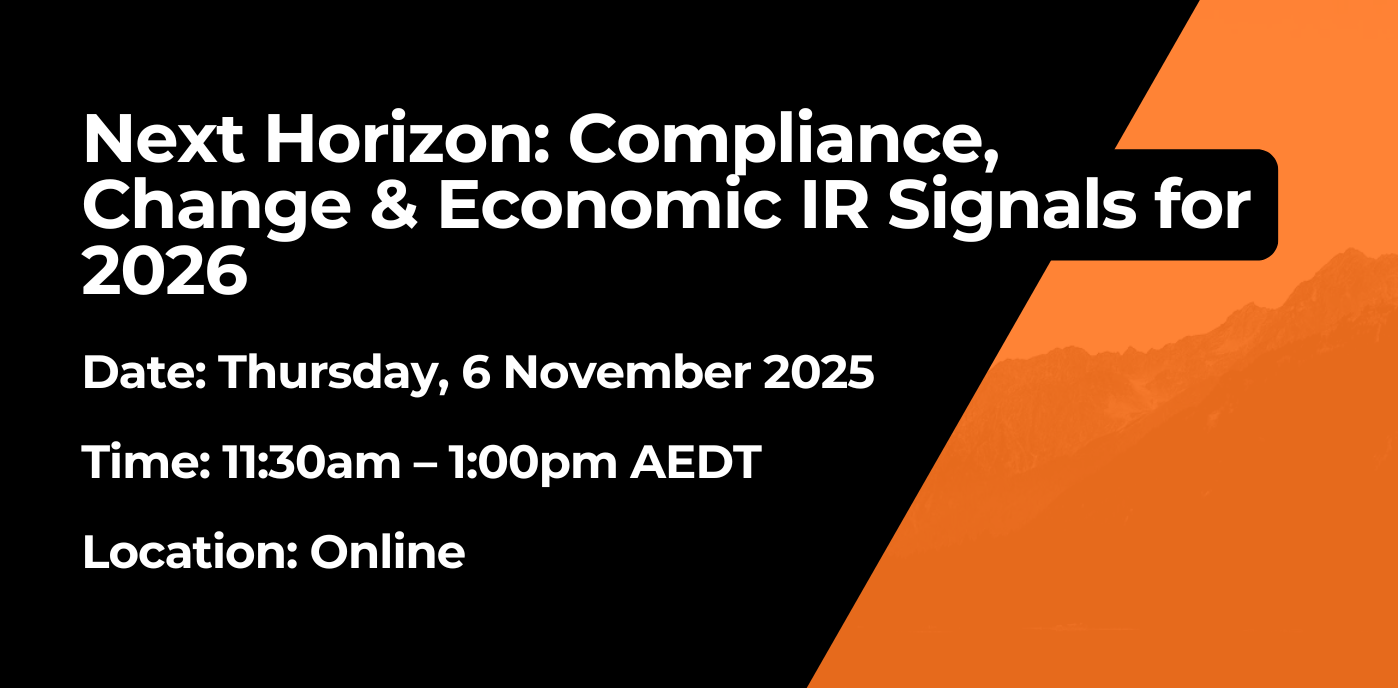
2025 has been one of the most transformative years in workplace relations. From the Right to Disconnect, Long Service Leave reforms, to the role of AI in the workplace, HR managers and business leaders have faced a year of compliance, complexity and change.
In this high-impact, on-demand video, join HR Command and a panel of leading experts for a sharp, insightful wrap-up of the year that was, and what lies ahead for 2026.
You’ll leave with:
✔ A clear understanding of the top IR and compliance issues of 2025
✔ Practical insights into what’s coming in 2026 and how to prepare
✔ Expert analysis of the economic outlook for employers
✔ Actionable strategies to keep your business and workforce future-ready
Speakers
Dr Sherman Chan – Chief Economist – Australian Property Institute
Sherman is the inaugural Chief Economist at the Australian Property Institute (API), with over 20 years of combined experience in government, banking, and consulting. Prior to joining API, Sherman was the Chief Economist of Business NSW, where she led strategic research to inform policy advocacy.
Sherman has a broad interest in economic research, and one of her focus areas in recent years is the evolving business and workforce challenges across Australia. Sherman holds a Bachelor of Commerce (Honours in Economics) and a PhD, both from UNSW. Sherman has also been a sessional lecturer at UNSW since 2014, teaching applied economics.
Toni Minovski – NSW Industrial Relations
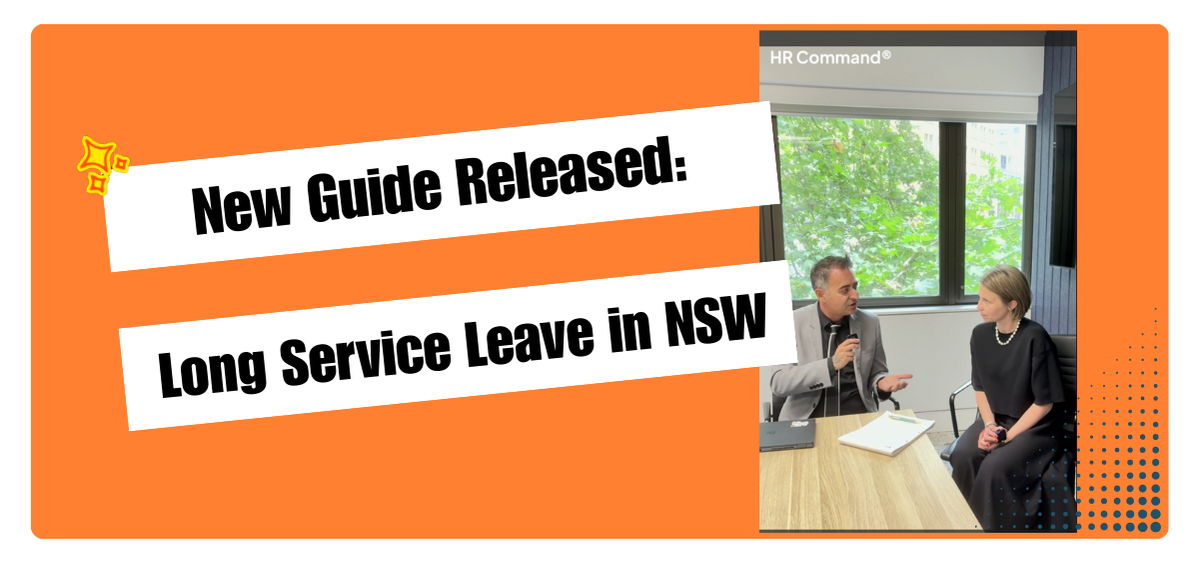
With over 20 years at NSW IR, Toni is a trusted authority in industrial relations and compliance. As Stakeholder Engagement Manager, he has guided thousands of employers, employees, and payroll specialists through the complexities of the NSW Long Service Leave Act 1955. Toni will unpack the 2025 reforms to Long Service Leave and what they mean for employers in 2026.
Caroline Beasley – Cowell Clarke Commercial Lawyers
Caroline advises across the full spectrum of workplace relations, including industrial relations strategy, enterprise bargaining, employment litigation, executive employment, and workplace investigations. She will share insights on IR compliance, litigation risks, and lessons from 2025 disputes that businesses need to be ready for in 2026.