

Valentine’s Day 2026 and Why HR Is Already Tired
Ahhh Valentine’s Day.
That annual reminder that beneath your crisp business attire, you still have feelings. Questionable ones. Feelings that make people think a heart-shaped chocolate is a good idea in a professional setting.
It’s also the day when someone’s awkward lunch date turns out to be a colleague, someone sends a “cheeky” message they absolutely should not have sent, and HR quietly clears their calendar for next week.
Because romance in the workplace is not just about butterflies and blushes. It’s about boundaries, power, consent and legal landmines disguised as roses.
Cupid Doesn’t Care About Your Handbook
The Law Does.
Every year, Valentine’s Day triggers the same workplace chaos:
- HR tip-offs about “work spouses” that everyone knew about except leadership
- DMs that sound flirty in the sender’s head and horrifying when read aloud
- Managers discovering conflicts of interest in their inbox, not their expense reports
It all feels harmless until it isn’t. There’s a human cost and a commercial one that no business can really afford.
Under Australian law, unwelcome conduct does not need to be explicit. If a reasonable person could see it as offensive, intimidating or humiliating, it can be unlawful. Valentine’s Day does not soften that test. It sharpens it.
If you don’t know whether an approach or action is welcome, assume it is not. Please also assume that you cannot judge your own actions as a ‘reasonable person’.
Not every Valentine’s card is cute. Some are liability with a ribbon.
Flirting at Work Is Not a Grey Area
It’s Context on Steroids.
A box of chocolates is only romantic if the other person wants it. If they don’t, it is not sweet. It is uncomfortable, awkward and potentially a compliance issue that now lives in HR’s inbox.
Consent is not a vibe. It is not implied by laughter or politeness. It is not inferred because someone did not immediately shut it down.
Add a reporting line, seniority or influence and the risk explodes. A manager pursuing a junior employee is not a rom-com subplot. It is a scenario tribunals see over and over again.
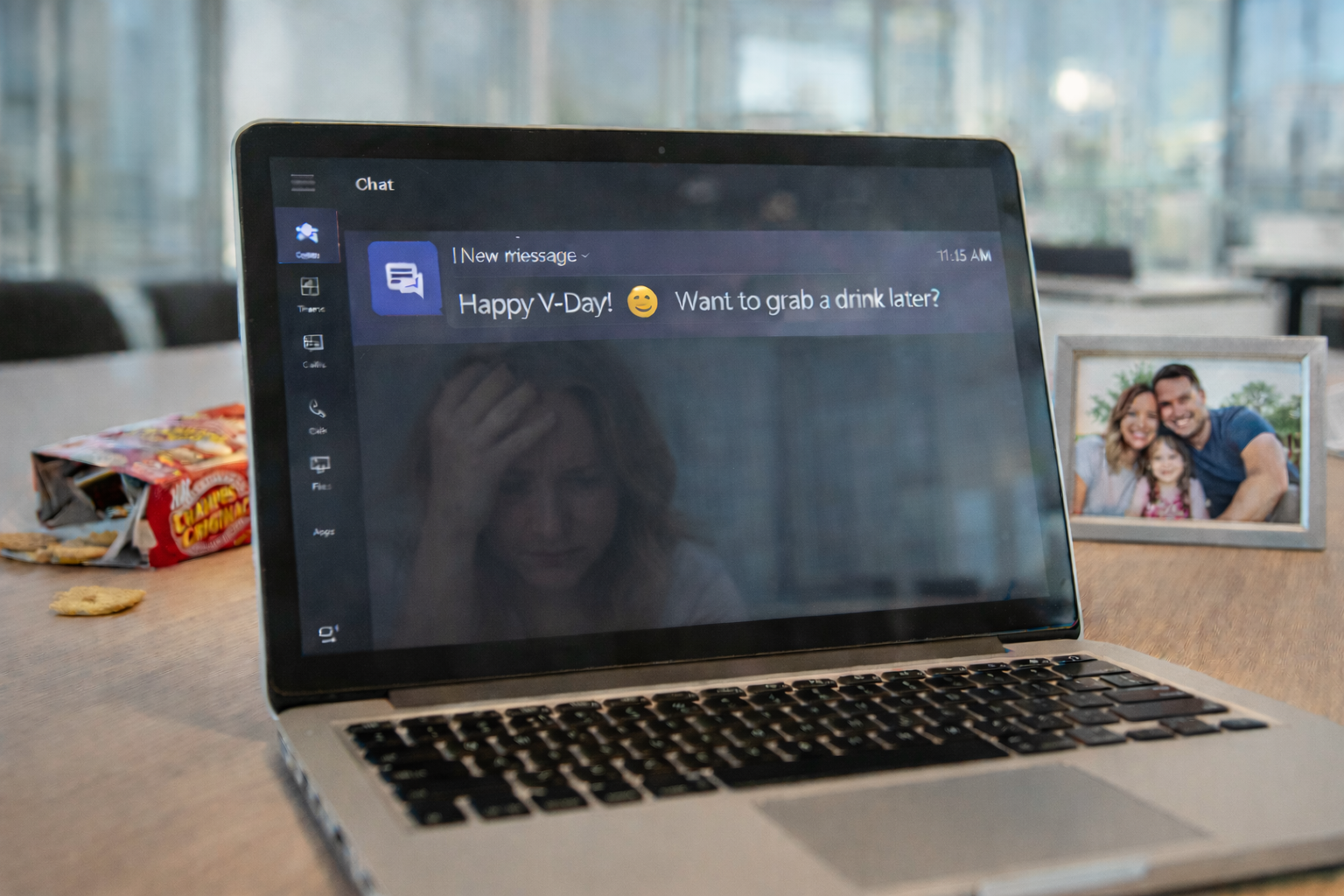
And when relationships are hidden, half-acknowledged or conducted via MS Teams at 3pm on a Tuesday, HR inherits the mess.
When It All Goes Wrong (And It Will, Murphy’s Law)
And It Predictably Does.
After Valentine’s Day, employers get asked the same questions:
- What if the gift or message was not wanted?
- What if a workplace fling turns into team tension overnight?
- What if a boss and a junior employee were involved and now every decision looks compromised?
These are not edge cases. They are the norm.
And because employers can be vicariously liable for sexual harassment unless they can show they took all reasonable steps to prevent it, Valentine’s Day suddenly feels less festive and more litigious.
Relationship Policies Are Not Anti-Love
They’re Anti-Disaster.
A workplace relationships policy does not exist to kill romance. It exists because silence creates risk.
A good policy:
- Forces transparency where there is a conflict of interest
- Draws a line around consent and professional behaviour
- Protects individuals and employers when things fall apart
Without one, HR is left making judgment calls in emotionally charged situations. With one, expectations are clear before feelings get involved.
Also worth saying. MS Teams is still a workplace. Private messages do not make it private.
Valentine’s Day Reality Check
If your business is leaning into Valentine’s Day with cupcakes, cards or “fun”, that’s fine. Just do not pretend the law takes the day off.
This is the week to remind people that:
- Respect still applies
- Consent is not assumed
- Disclosure is protection, not punishment
You can keep the message light. You can even make it funny. Just do not ignore the risk because it feels awkward.
Final Thought
Love might be in the air this Valentine’s Day, but HR’s job is to make sure the only hearts broken are the ones from the office playlist skipping a banger.
If you have a workplace relationships policy, now is the time to remind people it exists.
If you don’t, Valentine’s Day is the warning sign you keep ignoring.